What should I do if I have sensitive skin but still want organic products?
If your skin reacts easily, you do not have to give up on organic products. But an organic label cannot tell you whether a product will suit your skin. Organic certification is mainly about how certain ingredients are grown and processed—not whether a finished product is gentle, fragrance-free or hypoallergenic.
The safest approach is to check the certification, read the full ingredient list and introduce products slowly. In the shop, remember three things: check the certifier, choose fragrance free, and patch test sensitive skin. Those steps are more useful than relying on words such as “natural”, “clean” or “pure” on the front of a pack.
First, understand what organic certification does—and does not—mean
Organic certification is a process standard. It generally relates to how eligible agricultural ingredients are produced, handled and certified under a particular scheme. For a cosmetic, that could include plant-derived ingredients such as oils or extracts. It does not automatically assess every aspect of the finished product or guarantee that it will suit reactive skin.
That distinction matters because a product can contain certified organic ingredients and still include fragrance, essential oils, preservatives or other ingredients that may irritate a particular person. Conversely, a well-formulated product that suits your skin may not be organic. Organic is not always gentle, and “gentle” is not the same as “organic”.
In the United States, the USDA (United States Department of Agriculture) oversees the National Organic Program. The FDA (Food and Drug Administration) regulates cosmetics under US law, including applicable safety and labelling requirements, but it does not certify cosmetics as organic. A cosmetic may carry a USDA Organic claim when it meets the relevant USDA requirements for its ingredients and product category. The USDA seal is not a general FDA safety approval.
Know the USDA label tiers before you buy
USDA organic claims have different levels. The wording and the percentage of organic ingredients matter; a large “organic” word on the front is not enough to tell you which standard applies.
USDA label category General threshold What to look for “100 percent organic” All ingredients, excluding permitted processing aids and salt or water where applicable, must meet the standard. The USDA Organic seal may be used, and the certifying agent should be identified. “Organic” At least 95% organic ingredients, excluding salt and water. The USDA Organic seal may be used, and the certifying agent should be identified. “Made with organic …” At least 70% organic ingredients, excluding salt and water. The USDA Organic seal cannot be used. The label can identify up to three eligible organic ingredients or food groups, and should name the certifier. Less than 70% organic ingredients Below the threshold for “made with organic”. The product cannot make the USDA “organic” or “made with organic” claim on the principal display panel. Eligible organic ingredients may be identified in the ingredient list.These are the general USDA label tiers. Cosmetics can be more complicated than a jar of food: the rules depend on the ingredients, how the product is marketed and whether the finished product falls within the USDA programme. If a company claims USDA certification, look for a credible certification trail rather than assuming that every ingredient or every product from the brand is certified.
Seal versus marketing words
The USDA Organic seal is a regulated mark for products that meet the applicable USDA requirements. It is not interchangeable with a leaf graphic, a green-coloured label or a brand’s own “organic-inspired” logo. In the US system, the certifier’s name—or, for qualifying products, the certifying agent’s identifying mark—must also appear on labels making the relevant certified organic claims. https://potentash.com/2026/10/14/organic-certifies-beauty-wellness-labels/ Check the package for that certifier line, and confirm the claim if it is unclear.
Words such as “natural”, “clean” and “pure” are not substitutes for an organic certificate. They can be used in marketing in ways that do not tell you whether the product is certified or what percentage of its ingredients are organic. A product described as “natural” could still contain fragrance. “Pure” does not mean allergy-tested. “Clean” does not tell you how the product was tested or whether it is suitable for sensitive skin.
If you are shopping in East Africa for an imported product, the relevant certification may come from a different country or scheme. Look for the certifier’s name and the standard behind the claim. A familiar-looking seal is only useful if it is authentic and applies to that specific product.
How to choose an organic product when your skin is sensitive
1. Start with your own known triggers
Before shopping, make a short list of ingredients or product types that have caused trouble for you before. If you know you react to fragrance, a particular essential oil or a specific preservative, use that information to guide your choice. If you are unsure what is causing repeated reactions, a dermatologist or other qualified health professional can help you investigate.
Do not assume that plant-based ingredients are automatically mild. Botanical extracts and essential oils can be sensitising for some people, even when they are organic. “Plant-derived” describes an ingredient’s source; it does not predict how your skin will respond.

2. Choose fragrance free, not merely unscented
If fragrance is a concern, choose fragrance free and check the ingredient list. “Unscented” can mean that a product has little or no noticeable smell; in some products, fragrance ingredients may still be used to mask other odours. Fragrance may appear under terms such as “parfum” or “fragrance”, and essential oils can also contribute scent.
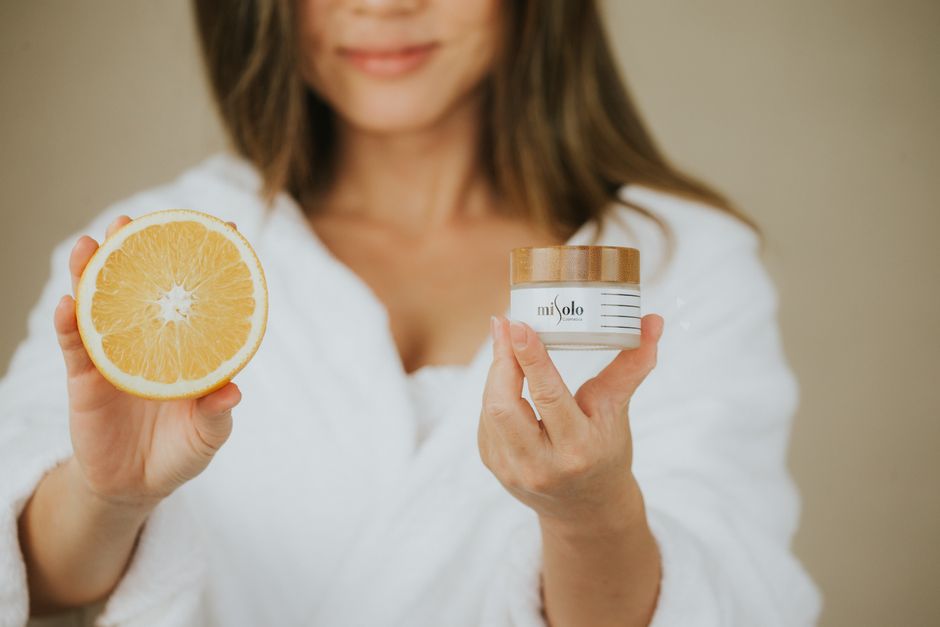
Fragrance-free products are not guaranteed to suit everyone, but avoiding added fragrance can be a practical first step for people who know they react to scented products. Check the full formula rather than relying on the front label, particularly with oils, balms and botanical creams.
3. Prefer simple formulas you can understand
A shorter ingredient list can make it easier to identify a possible trigger, but “short” does not automatically mean safe or gentle. Focus on ingredients you know your skin tolerates, and avoid buying several unfamiliar products at once. A cleanser, moisturiser or body product that meets your everyday needs may be a more useful first purchase than a complex treatment with many extracts.
Consider where you plan to use the product. Skin around the eyes, broken skin and areas affected by eczema can be more reactive. Do not use a cosmetic on irritated or damaged skin unless a healthcare professional has advised you to do so.
Patch test sensitive skin before using a new product fully
A patch test for sensitive skin can help you notice a reaction before applying a new product over a large area. It cannot guarantee that you will never react, but it is a sensible precaution—especially when trying a product with unfamiliar ingredients.
- Choose a small area of skin, such as the inner forearm or the bend of the elbow.
- Apply a small amount of the product to that area as directed on the label. Do not test on skin that is already irritated or broken.
- Repeat the application as you would normally use the product, if the label allows. Observe the area over several days rather than judging it after a few minutes.
- Stop using the product if you develop burning, persistent redness, itching, swelling or a rash. Wash it off if needed.
- If you have a strong reaction, swelling or symptoms that concern you, seek medical advice.
For products intended to be rinsed off, follow the product directions rather than leaving them on your skin for longer than instructed. A home patch test is not the same as formal allergy testing by a clinician. If you have a history of severe reactions, ask a dermatologist how to test new products safely.
What batch testing can tell you—and what it cannot
Some brands publish or provide batch testing results for individual production lots. Depending on the product and the tests performed, these may help show whether a batch was checked for specified contaminants, ingredient levels or quality measures. Read what the test actually covers: “tested” on its own is not enough information.
Batch testing does not prove that a product is organic unless the relevant organic certification process also supports that claim. Nor does it prove that a product is hypoallergenic or that your skin will tolerate it. A test may check for particular substances without assessing every possible irritant or individual sensitivity.
For example, shoppers may come across companies such as Joy Organics when researching wellness products. Treat any organic, testing or skin-suitability claim as product-specific: check the actual item, its ingredient list, the scope and date of any test information, and the certifier if USDA certification is claimed. A company’s reputation or a testing statement should not replace those checks.
A quick shopping-aisle checklist
- Check the claim: Is it “organic”, “made with organic”, or only a marketing phrase?
- Check the seal and certifier: If a US-certified organic claim is made, look for the USDA Organic seal where permitted and the certifier’s name or identifying information.
- Check the ingredients: Look for known triggers, added fragrance and essential oils—not just the front label.
- Choose fragrance free: Especially if fragrance has caused you problems before.
- Read testing claims carefully: Find out what batch testing covers; do not treat it as proof of gentleness or organic status.
- Buy one new product at a time: That makes it easier to spot what may have caused a reaction.
- Patch test first: Introduce the product gradually and stop if your skin reacts.
The bottom line
You can choose organic products and still make sensitive-skin decisions carefully. Treat certification as evidence about a production standard, not as a promise about how your skin will feel. Check USDA label tiers, look for the certifier line on US-certified products, and do not confuse a seal with words such as “natural”, “clean” or “pure”.
Then put your skin first: read the full ingredient list, choose fragrance free if that suits your needs, and patch test sensitive skin before regular use. Organic can be one factor in your shopping choice—but it is not a substitute for knowing your triggers or judging how a product works for you.